Yes, TMS can be an effective treatment for anxiety, especially when anxiety appears alongside depression or as obsessive-compulsive disorder. TMS is approved for anxious depression and for OCD. For anxiety on its own, research is still growing, so the right answer depends on your diagnosis and your treatment history. At Mentable, we offer NeuroStar TMS as a non-medication option, paired with traditional psychiatric care so each plan fits the person in front of us.
What Is TMS Therapy?
Overview of Transcranial Magnetic Stimulation
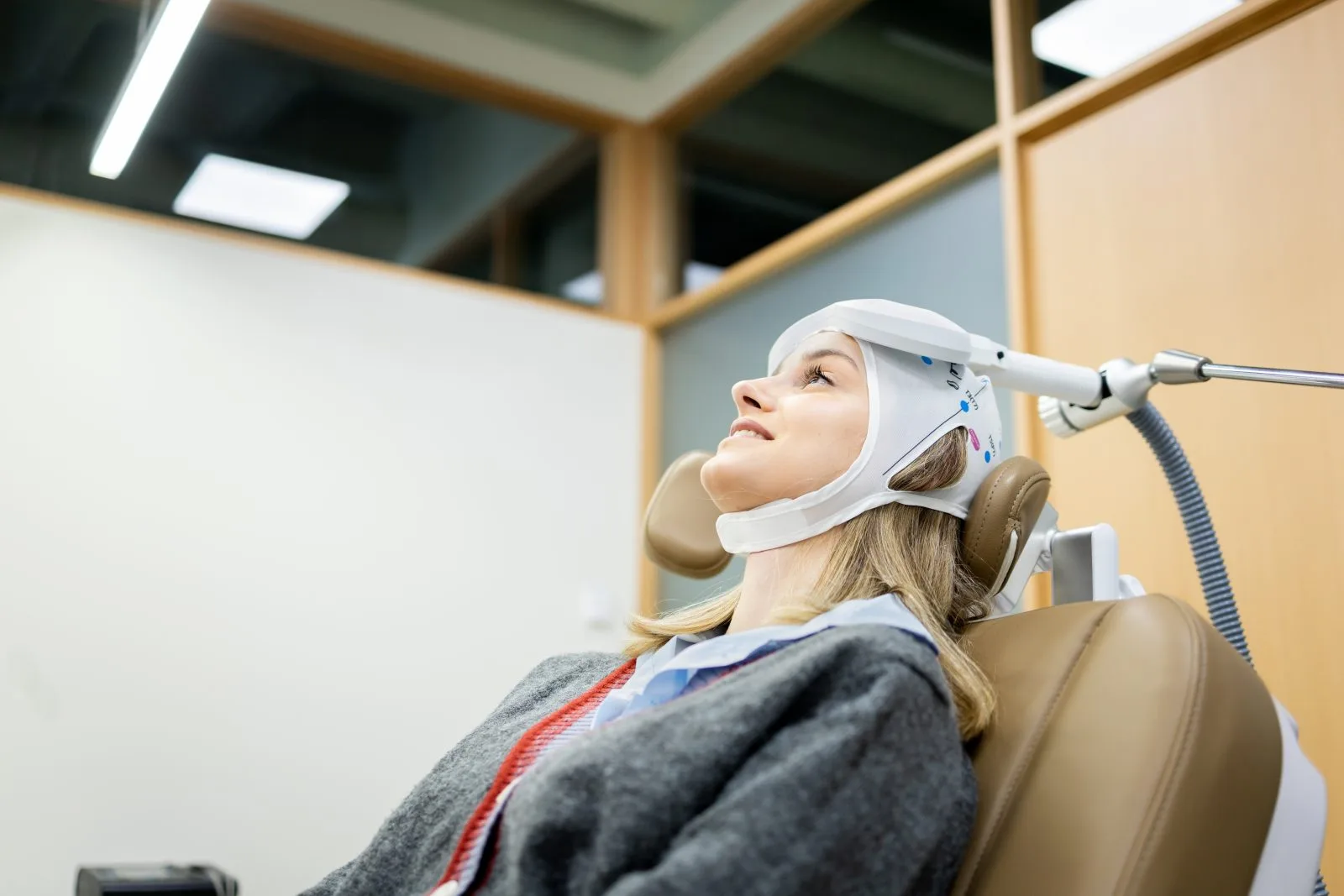
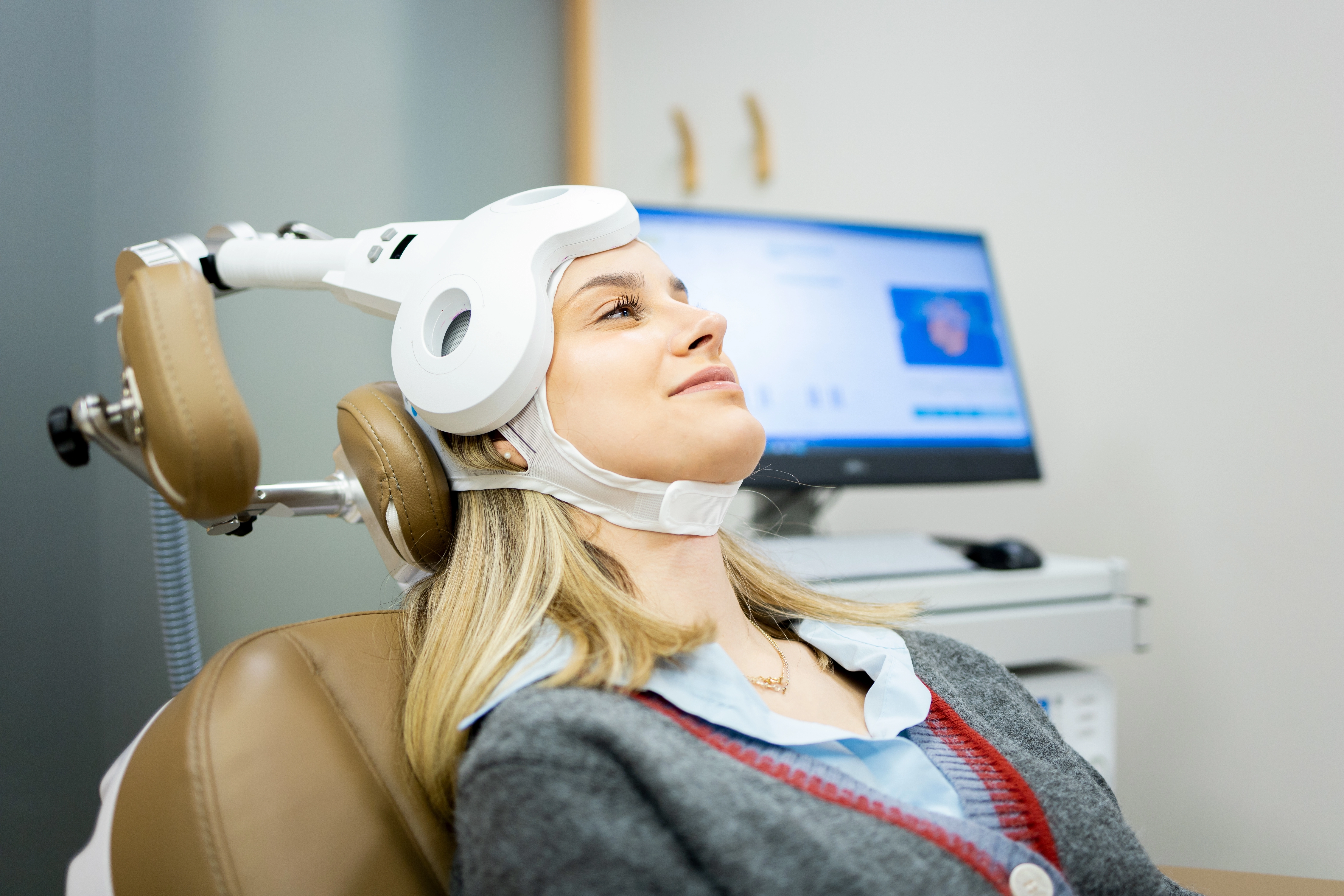
Transcranial magnetic stimulation, or TMS, is a non-invasive treatment that uses magnetic pulses to stimulate specific areas of the brain. A treatment coil rests against the scalp and sends focused pulses to regions involved in mood regulation. No surgery is involved, and no anesthesia is needed.
Patients stay awake and alert during each session. Most return to work, drive or go about their day right after treatment. This is one reason many adults look into TMS when they want an option that does not add another daily pill.
How TMS Works for Anxiety Disorders
Anxiety and depression often involve changes in how certain brain networks communicate. One area, the prefrontal cortex, plays a large role in regulating emotion and calming the brain’s fear response. In many people with ongoing anxiety or depression, activity in this area is lower than it should be.
TMS targets these regions with repeated magnetic pulses. Over a course of sessions, the stimulation encourages healthier activity in mood circuits. For patients whose anxiety is tied to depression, this can ease the constant worry, restlessness and tension that come with low mood. For patients with OCD, a different brain target is used to address intrusive thoughts and compulsive behaviors.
How Effective TMS Is for Anxiety
Effectiveness of TMS for Anxiety
When patients ask us "Is TMS an effective treatment for anxiety," we start by looking at what kind of anxiety they have. TMS has the strongest support in two situations:
- Anxious depression. This is major depression with significant anxiety symptoms. TMS is approved for this use, and many patients notice their anxiety eases as their mood lifts.
- OCD. TMS is approved for obsessive-compulsive disorder, a condition built around anxiety-driven thoughts and rituals.
For generalized anxiety disorder without depression, TMS is still being studied. Some patients benefit, but it is not yet a standard first step.
Success Rates and Research Findings
Research on TMS for depression has grown steadily for years, and much of that work includes patients with high levels of anxiety. These patients often respond as well as those without anxiety. Studies on OCD have also shown meaningful symptom improvement for many patients who did not get enough relief from medication or therapy alone.
Results vary from person to person. Some patients notice changes within the first few weeks. Others need the full course before they feel a clear difference. Rather than promising a specific outcome, our team tracks your symptoms throughout treatment so we can see what is working and adjust the plan when needed.
Is TMS Effective for All Types of Anxiety Disorders
TMS is not a match for every anxiety condition. Here is how it lines up with the conditions we treat:
- Anxiety with depression: Strong fit, and the most common reason patients pursue TMS for anxiety symptoms.
- OCD: Strong fit, with an approved treatment protocol.
- Generalized anxiety, panic disorder and social anxiety on their own: Evidence is emerging. These patients usually start with medication management and psychotherapy.
- PTSD: Research is ongoing. Treatment decisions are made case by case.
Because anxiety often overlaps with other conditions, a thorough psychiatric evaluation is the first step in deciding whether TMS makes sense.
Benefits of TMS for Anxiety
Patients who are good candidates for TMS often value these benefits:
- No systemic side effects. TMS does not travel through the bloodstream, so it avoids the weight gain, drowsiness and sexual side effects some patients have with medication.
- Non-invasive. There is no surgery, no sedation and no recovery time.
- Stay alert. You can drive yourself to and from sessions and return to your normal routine.
- An option after medication. TMS is designed for people who have not responded well to antidepressants or could not tolerate their side effects.
- Works with your current care. Many patients continue their medication and therapy during TMS.
The most common side effect is mild scalp discomfort or a light headache during early sessions, which usually fades as treatment continues.
How TMS Compares to Other Anxiety Treatments
TMS vs. Medication
Medication is often the first treatment for anxiety, and it helps many people. Through medication management, we adjust doses and choices over time to find what works. Some patients, though, try several medications without enough relief, or they cannot stay on a medication because of side effects.
TMS offers a different path for these patients. It works directly on brain activity without adding chemicals to the body. Many people use TMS alongside medication, while others use it to reduce their reliance on pills over time.
To help guide medication choices, we also offer psychogenetic testing and lab work. These tools can show how your body may process certain medications, which helps us get to the root of why past treatments may not have worked.
TMS vs. Cognitive Behavioral Therapy (CBT)
Cognitive behavioral therapy is a talk therapy that teaches people to recognize anxious thought patterns and respond to them differently. It is well studied for anxiety and gives patients skills they can use for life.
TMS and talk therapy work in different ways, so they are not competitors. TMS changes activity in brain circuits, while therapy builds coping skills and new habits. Many patients find that as TMS lowers the intensity of their symptoms, they can engage more fully in therapy. Our team offers supportive psychotherapy with a solution-focused brief approach that pairs well with interventional treatment.
TMS vs. Electroconvulsive Therapy (ECT)
Electroconvulsive therapy is another brain stimulation treatment, usually reserved for severe depression. ECT requires general anesthesia and works by inducing a controlled seizure. Some patients experience short-term memory problems afterward, and they cannot drive on treatment days.
TMS is much gentler. It does not cause seizures as part of treatment, does not require anesthesia and does not affect memory in the way ECT can. For many patients with anxious depression, TMS is a reasonable step to try well before ECT would be considered.
What to Expect During TMS Treatment
The TMS Treatment Process
Your first TMS session includes mapping. During mapping, the provider finds the right spot on your head and the right strength of stimulation for your brain. These settings are saved and used for every session that follows.
Regular treatment sessions typically last 20 to 40 minutes. Most patients come in four to five days per week over several weeks. Patients who cannot come that often may be able to attend two or three days a week, though this extends the overall course.
During a session, you sit in a comfortable chair. You will hear a clicking sound and feel a tapping sensation on your scalp. Many patients read, listen to music or simply rest. When the session ends, you can leave and continue your day.
Managing Anxiety Disorders with TMS
Managing anxiety disorders with TMS works as part of an active plan. During your course, we check in on your symptoms often. We look at changes in worry, sleep, focus and mood. If progress is slower than expected, we may adjust your plan or the other treatments you are using.
At our office, patients meet with the same provider throughout their care. Camellia Douglas, MSN, APRN, PMHNP-BC, is a board certified psychiatric nurse practitioner who oversees each patient’s plan from evaluation through follow-up. This consistency means your progress is reviewed by someone who knows your full history, not someone meeting you for the first time.
Some patients notice gradual changes, such as sleeping better or feeling less on edge, before they notice a lift in mood. Small shifts like these often come first, so we encourage patients to share any change they notice.
Integrating TMS Into a Comprehensive Anxiety Treatment Plan
Can TMS Be Combined With Other Treatments
TMS can be combined with other treatments, and for many patients this works better than any single approach alone. Common combinations include:
- TMS with medication management
- TMS with supportive psychotherapy
- TMS with both medication and therapy
The goal is to treat anxiety from more than one direction. TMS addresses brain activity, medication supports brain chemistry, and therapy builds daily coping skills. We decide on the mix based on your symptoms, your history and your goals.
TMS as Part of a Whole-Person Approach
Anxiety rarely exists by itself. It can overlap with depression care needs, attention problems, sleep issues or physical health factors. That is why we look at the full picture before recommending treatment.
Our approach blends interventional treatment such as TMS with traditional psychiatric care. We also use ADHD testing, psychogenetic testing and lab testing when they can help explain what is driving your symptoms. Untreated ADHD, for example, can look a lot like anxiety, and certain lab results can point to physical causes of anxious feelings.
We treat adults from all walks of life and offer culturally sensitive care, with support available in English and Spanish. Active listening is at the center of every visit. We want to understand how anxiety affects your work, your relationships and your sense of calm before we suggest a plan.
You can learn more about how we approach anxiety treatment and how TMS therapy fits into care at our Charlotte office.
Conclusion: Deciding Whether TMS Is Right for You
So, is TMS an effective treatment for anxiety? For adults with anxious depression or OCD, the answer is often yes, particularly when medication has not worked well or caused side effects. For anxiety without depression, TMS may still play a role, but medication and therapy usually come first. A careful evaluation, a plan that uses more than one tool and steady follow-up with the same provider give you the clearest path toward lasting relief.